Monday, November 17, 2014

The Shining

In the Shining there is great use of zoom and music to create the feeling of suspense. A scene that stood out to me with suspense was when Danny, the little boy, was on his tricycle going down the halls. He does this often but there is one scene where he stops after passing room 237. At the beginning of he scene there is no music expect for the sound of Danny's wheels on the floor. As he gets closer to the room the music builds very slowly. The camera follows him consistently from behind. Once he stops right at the door, the camera shows from his (low) angle the room number. The camera follows Danny as he does to the door and tries to open it. The music stays at the same tone and volume however a slight acceleration in almost a 'voom' sound when there is a vision of the two sisters in blue dresses behind the door. The Danny goes back to his tricycle and the camera stops following him as he speeds away down the hallway. This was very suspenseful for me because I also recalled before one of the workers warned Danny not to go there. Therefore, it was more interesting and suspicious as to what was in there. Creating a focus in curiosity for the audience while watching this specific part.


http://www.curzoncinemas.com/library/films/3147/make-mine-a-double--26-room-237---festen-/

What do you think was the purpose of this scene?

The Shining

There is no doubt that director Stanley Kubrick has mastered the art of creating suspense in his film, The Shining, but what is interesting is how he does this. For me, what has made the film scary so far is the element of foreshadowing. Kubrick often drops hints at what will happen throughout the film that leave you on the edge of your seat. Along with music, foreshadowing helps build the suspense and thus makes the movie scary for viewers.
One scene in particular where the use of foreshadowing aids in building suspense is when the viewer can confirm that something sinister will happen with the main character, Jack. His wife and young son are playing in the snow laughing and having fun. He is sitting inside the hotel looking at them through the window. But what makes this scene interesting is the face that Jack makes. He is looking at them in a malicious way, almost as if he's evil. This is a contrast from how he acts in the beginning of the film, which makes this scene scary for viewers. Because the viewer is aware of Jack's change starting to occur from the previous scene when he yells at Wendy for bothering him, this scene only solidifies this theory, that in fact he is different from how he is in the beginning of the film. Also, his face here is shot with an extreme close up shot. You are able to analyze just how he is different now as opposed to before. For example, you can now see the stubble that has grown on his face most likely from typing day in and day out. Something else is that the background behind his is blurred, and is a similar color to the sweater he is wearing. This only helps the viewer focus on Jack in this scene, showing that he is, if not, the most important character in the film, and to look out for what is to come of him. These elements help build the curiosity within the viewer. These foreshadowing techniques is what ultimately builds suspense.
But what could some other scenes be that help built suspense this far along in the film? Is foreshadowing a definitive way to create a movie to be "scary" all the time? Why or why not?


The Shining Part 1

Scott Yarmoff
Mrs. Robbins
Film Analysis period 3
11/17/14
The Shining Part 1
I have seen this movie before and can tell you that if you don't like horror, it's only going to get worse from here. We haven't seen a thing in class yet. Up to this point, I would say the scariest part would be when Danny is biking around the hotel and finds room 237. The scary part isn't when he arrives at the room but rather when he is biking through the hallway. Eerie music picks up as Danny rides through the hall which would normally just slightly build until something horrifying pops up. The music and the fact that the audience can't see around the corner before each of Danny's turns adds to the suspense that anything can come up. This sequence had happened once before with nothing coming out of it, so the audience is forced to believe that something will happen this time. Kubrick keeps the audience on the edge of its seats again.

The Shining

A scene among those that we have so far watched in The Shining was the scene that depicted Danny riding his toy bicycle around the hallways, stopping only at the ominous room 237. The camera closely followed Danny as he pedaled through the various hallways, limiting the audience's view of what he was seeing until he had already rounded the corner. This setup, mixed with a variety of elements to make this a scary scene. The music was quiet, but eerie, it also enabled us to hear Danny's pedaling, reminding the audience that Danny is effectively alone in the hotel at this point. The more he pedals down the hall the more the suspense grows during this scene. When he reaches the room, the audience is reminded of the fact that he was told by the psychic Dick Halloran not to enter the room under any circumstances. The suspense of the scene reaches it's highest point as he reaches for the doorknob, and the flash of the two creepy twin girls doesn't alleviate the situation at all.

The Shining

Gottschalk 1

Lauren Hope Gottschalk

Mrs. Robbins

Critical Analysis of Film and Literature

18 November 2014

The Shining

It is easy to say that thus far all parts of The Shining are scary in their own way, yet one scene seems 

more frightening than the others. It is understandable that young Danny Torrance will do anything to 

keep his mind occupied. Staying in a ginormous hotel, without playmates, without getting to leave  

the premises is maddening enough. It has been seen so far that he enjoys playing outside with

his mother and bike riding down the long hallways of the Overlook Hotel. There is a scene in 

the film where Torrance is biking down these hallways one after the other. Part of what makes this

part of the scene scary is that it is shot so the viewers seem like they are with Torrance. Also,

Torrance keeps riding the bike on carpet then on wood which is loud and adds to the suspense of the

scene. There is also low and eerie music playing, and no one knows what the next hallway will

bring Stanley Kubrick seems to be playing with the audiences emotions because in the end there is

nothing in each hallway that Torrance visits. The fear of the unknown as was also seen in Psycho 

when Detective Milton Arbogast begins to ascend the stairs of the mansion. Another part that makes

this scene scary is that Torrance abruptly stops in the middle of the hallway when he sees room 237.

There is a rack focus and a over the shoulder shot of Danny who is not in focus and room 237 which

 is in focus. In a previous part of the film Dick Hallorann had told Torrance that he should never enter

 room 237. This may leave the audience feeling curious and a little afraid of what lies in room 237.

Torrance continues to remove himself from his bike and tries to enter room 237. This is frightening

 because there could be something dangerous and terrifying in that room. Yet the door is locked and

Torrance cannot enter. The door being locked resembles another idea of fear of the unknown.


Why did Kubrick lock room 237? 


Thursday, November 13, 2014

Psycho

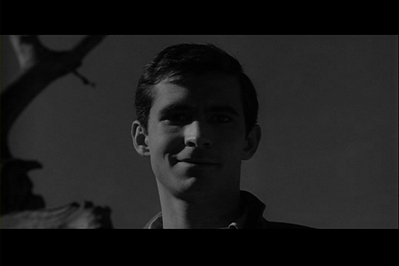
Pschyo was enthralling. I really liked it. I thought it was a great thriller and really kept me on the edge of my seat the whole time. I don't really consider it a horror movie, but more of a thriller.

Alot of it is on the actors. Anthony Perkins does a great job of playing a innocent looking person with such a polar opposite side about him. His acting is also very complicated beause he is playing two different personalities and had to differentiate who did what: Norman or Mother.

Although the Actors did alot, obviously Hitchcock works some serious magic behind the camera. His ability to explain things just the camera and no dialogue is exceptional. One scene in particular is when Marium is getting ready to leave her hotel and run away with the money, the camera focuses on the money on the bed and then her and then the suitcase. Just by doing that, the audience knows that she is running away with the money and no dialogue was needed.

The music was also key in adding the suspense that the film had. I think the most recognizable theme is whenever Norman or "Mother" jumps out with the knife when he/she tries to kill someone.

The last thing I thought really worked was the twist in the end. The way the psychiatrist explains how Norman's mind works and then when the camera cuts to Norman and it's clear that he is 100% Mother.

https://d2nh4f9cbhlobh.cloudfront.net/_uploads/galleries/4465/psycho-anthony-perkins-as-norman-bates.jpg

Wednesday, November 12, 2014

Psycho

In the classic thriller Psycho, Hitchcock approaches society’s idea of scary in a very interesting way and uses many different techniques to portray horror. The one tactic I picked up the most was his use of music in the film. To me, the reoccurring music that played whenever something suspenseful was happening in the film was the scariest part about it. Right when we heard that music, we knew that something bad was bound to happen. The most prominent use of music to me was when the detective was going upstairs to look for Mrs. Bates (Norman’s mother). The suspenseful strings were playing in the background the entire time he slowly walked up the stairs. This is when the audience knew something would happen to him, but the terrifying part is: when will it happen? Hitchcock did a great job with keeping the audience at the edge of their seats. Finally, when Norman came out with his knife dressed at his mother, a loud eruption of music broke out (and made me literally jump). I thought that was the scariest part of the entire scene because of the shocking aspect of the music and how we did not expect Norman to come out at that time. I think that music really enhanced the horror of this thriller.


Do you think that music was effectively used in this film or was it distracting? Do you think that the reoccurring suspenseful music was a good choice?

Tuesday, November 11, 2014

Psycho

In Hitchcock's Psycho, he approaches "horror" in a thought-provoking way. In comparison to many current horror films, Psycho stands out for its artistic creativity and conceptual plot. This was one of the first horror films to ever focus on the aspect of paranoia. While watching, from the very first moment where the audience was introduced to Norman, it is clear that something is "off" with his character, especially by the way he gets defensive about his "ill" mother. As the plot progresses, and our main character is murdered, hints are dropped to convey the true identity behind Mrs. Bates. For example, when the audience discovers that there had been an incident between Norman and his mother ten years ago when he felt abandoned to his mother's partner. It is said that Mrs. Bates had died years ago, so how could his mother be the figure in the window? I found it quite captivating to have a plot that was so unpredictable with sudden deaths and a main character (Norman) who is hiding something. Norman's sickness combined with his obvious paranoia of people coming around him and his "mother" only leads him to commit several murders all being blamed on his mother. This insanity is an interesting way to portray a "villain" or "bad guy" considering it is a mental disorder that he has put on himself. Did you consider this film to be predictable? What components did Hitchcock use to achieve or to stray away from this idea?


Psycho

Scott Yarmoff

Mrs. Robbins

Film Analysis Period 3

11/11/14

Psycho

Multiple Personality Disorder is when one body and brain goes back and forth between two or more personalities. Norman Bates in this film had a self-made case of Multiple Personality Disorder. He made it to preserve the illusion that his mother was still living after he killed her and her lover. It takes a special level of crazy to achieve this type of action. It's screwed up to a point that not only are his personalities aware of the existence of the other, they can communicate. What's worse is that Norman seems to be so alone (in reality) and occasionally feels an attraction to a guest, which makes his "mother" jealous, so "she" kills the person, leaving Norman as alone and confused as before. He was the one, however, who caused this whole chain to begin, so anyone could definitely argue that it was all his fault even if he was out of his mind during the murders. I got the impression that Norman and his mother got along well before he killed her, so if he loved her so much, why would he kill her just because he's jealous of another man?
Also, this doesn't relate but I'm curious, how does Marion hear Norman and his mother arguing? Is he just speaking in two voices?

Psycho

The film Psycho featured a variety of interesting camerawork, from both the fluidity of the camera simulating the involvement of the audience in the film, and the interaction of characters with the audience (In Psycho most notably the final look Norman Bates gives the audience in the asylum).

Alfred Hitchcock used the camera to direct the course of the film, especially in Psycho the camera moved like a human eye, sometimes watching on (often in surprise, suspense, or horror) and other times following frantically as the story went on. The moments of pause and focus were largely on facial expressions, the eyes especially. Both Norman's insanity (first in the parlor scene) and Marion's death (The drain fading to her empty eyes) are displayed beautifully through the camera's focus on their eyes.

The moments where the camera was moving around however were often to force the audience to remember something, or to put them in a moment of suspense. One of my favorite moments where this happened concerned the death of Arborgast, the private detective. Though yes, a murder had already taken place and it was an eerily quiet scene as he climbed the stairwell (all foreshadowing something), I was still surprised when I first saw it. Simply because though there was music that was just before the murder, it was very sudden much like when Marion was murdered. That combined with the sudden cut to an overhead shot that left us seeing a perfectly unaware detective suddenly getting stabbed to death, needless to say it was surprising.

Psycho


In class, you asked us if we thought the first or second murder scene in Psycho was more suspenseful. Initially I thought that the second scene was, because the music suggested that something was about to happen, but then I realized that because of this, it was kind of obvious and therefore less exciting. Also, because a murder had already happened on the property by the "woman" who lived in the house the PI walked into, the audience was completely expecting the second murder. Looking back to the shower scene, no music was played until the "psycho" came into the bathroom and killed Marion, which created generated more of a shock to the audience because no one saw it coming. It was eerily calm in the bathroom for a while, as Marion was innocently taking a shower. Some people may have saw it coming but I did not until the camera was on the door behind the shower curtain and then it all happened. The point of a thriller is to be sitting on the edge of your seat the whole time waiting for the next big thing to happen, so in a way I was viewing it that way in this scene, because usually something happens in the shower, in any movie. It's just a classic position of being completely vulnerable so that anything can happen and you can't escape. If it was just a little part of the plot, like if Marion was just taking a shower to wash the day off, then the movie might just have shown Marion getting out of the shower, but it was an important scene as soon as Marion flushed the evidence of her transaction down the toilet.


What other factors make a scene suspenseful?

Psycho

Psycho is not necessarily the scariest movie today, but at the time it was like no other movie before. The shower scene is undoubtedly the most famous part of the entire film. I think one of the biggest reasons that scene stuck with people is because of how "real" it felt. When people are taking showers, they are at their most vulnerable. Trapped in a small area with no clothing or protection, you feel very exposed and trapped. Also, a shower is a place everyone goes. It isn't some creepy mansion or forest. The killer wasn't some monster, it was a regular person. Everything felt plausible, and the realer a horror or thriller movie seems, the greater impact it will have. Audiences after the movie would jump at a shadow moving behind the curtain for months. Also, the score played a huge role in the fear factor. The sound was sudden, violent, and harsh on the ears. It still remains one of the most iconic musical cues in cinema. There was one shot in particular that was very unique, when the camera transitions from the drain to Marion's eye. What is the significance of that?

Psycho

Psycho per say wasn't the scariest movie known to most people, but it was the fact that it was a psychological horror movie. Hitchcock does a good job with turning a basic human into a psychologically messed up man where it's easy to believe that he can exist on earth. What made it scary to viewers was the fact that it was a realistic horror that can happen in real life. It's easier for the viewers to picture a psychologically disturbed man who kills, but doesn't realize that he's killing. Norman suffers from multiple personality disorder which allows him to switch from being Norman Bates to his mother.

Hitchcock uses the unknown and suspense to create the scariest parts of the movie. When the viewers first meet Norman you don't think that he could be a serial killer who has two personalities. Hitchcock waits until the very end to reveal that Norman isn't just one person. The use of this psychological disorder is what scares the viewers the most because it's abnormal and very unusual.

Compared to other horror movies such as Paranormal Activity, Jeepers Creepers, and Friday the 13th it's much less scary, but in a sense that it's not graphic with blood and craziness every second of the film. Norman Bates is a character that gets inside of the viewers heads and creates the fear that we would normally feel in other horror movies.

Do you think that Norman Bates would be more terrifying having two personalities or just one?

Psycho

Noah Pines

Hitchcock's Usage of Unusual Shots

Alfred Hitchcock was an incredible filmmaker, and is still today regarded as one of the best directors of all time. After finishing watching Psycho, it was very obvious to me that Hitchcock took advantage of many unusual camera movements to enhance the viewing experience, making the audience feel more like they were in the scene, watching everything.


The first unusual shot is when the camera zooms in on a window, then passes through a crack, into the room as a couple is getting dressed after sex (another unusual scene to see in a movie). This shot gave the effect that we were just floating into this scene. (This camera movement has been imitated many times, most notably in two Mel Brooks movies, involving the camera smashing through the glass of a window as it tracks too far forward.) Hitchcock also uses lots of extreme high angles to achieve this effect.

Two other unusual shots occur during the shower scene. The first one is when you see Marion showering, and you see the silhouette of Norman Bates appear through the shower curtain. This a very scary moment, because the moments leading up to it are full of suspense. No music is played, only natural sounds are heard, making it feel like you are right there in the scene with Marion. The second shot is after the stabbing, when water is seen going down the drain, and the image dissolves to match Marion's open eye.

Why did AH choose to have the drain shot match up with Marion's eye?

BONUS: Here's a clip from Mel Brooks' High Anxiety (a film devoted to spoofing the movies of Hitchcock), which is a direct parody of the shower scene from Psycho.

Psycho

Psycho is without question a classic masterpiece of horror. The entire film makes the viewer incredibly nervous and in some scenes, terrified. It has no doubt inspired several of the countless amount of horror movies being released today, most of which are regrettably sub-par. The surprise reveal that Norman Bates was the killer all along is a brilliant plot twist, and one that no doubt shocked audiences across the world. However, in the midst of all of this genius and hype, I feel that something important has been overlooked. During "Mother's" final monologue, she reveals that she was never the killer, and that it had always been Norman. If we are to believe this, then it virtually erases all of the action in the plot. We are initially led to believe that "Mother" is insanely jealous of her son, and will kill any woman he is attracted to. The reveal at the end of the film seems to contradict this. It wouldn't be a problem, except for the fact that Norman happens to kill all of his victims while dressed as "Mother". If it is his normal persona committing the murders, then why does he do this? Do you think Hitchcock had a vision behind this, or do you think it was just for plot convenience?


Psycho

After watching the film Psycho directed by Alfred Hitchcock something that was unclear for me towards the end was if we should have felt bad for Marion or not. As our main character it was tough to get a read on Marion, but I think Hitchcock was trying to show that crime is payed with crime.

In the beginning of the movie when Marion is driving we are constantly reminded she has a conscience as she continues to replay the consequences in her head, making her hesitant to keep on traveling. I think her pulling over because of the rain was her morals pleasing with her to give this rash decision some more thought. Consequently, she does decide to make the trip back to Phoenix when she figures out how much she owes out of the 40,000.

When Marion steps into the all white shower her innocence reappears and is ready to make the trip back from where she came. This white background reflects that she has made a 360 change in her life but was this enough? Clearly, Hitchcock didn't believe that she was worthy of leaving the Bates Motel to make up for her mistakes.

I asked myself if I was in control of the movie would I let Marion survive or not, so I reviewed everything she did up to that point. The answer that came to me was of course she should of had the opportunity for reconciliation. A quick decision to escape with 40,000 dollars which came with visible self questioning and guilt made the audience surprised when she was killed. I also believe she was a good person because of the reactions of her sister and the fact her boss wasn't pressing charges.


All White background


Psycho

Psycho is a frightening story about a hotel where multiple people suddenly disappear. Through the entire film, there is a conflicting message about the good and the evil inside of us, and when which chooses to come out.


This theme is obvious as we monitor the multiple personalities within Norman Bates battle in conflict of each other. What is less obvious is that this theme is also imbedded throughout other parts of this film.


For Norman, it is a constant struggle for him to see the good above the bad, because as it was revealed in the end, his mother's personality is inside of him. In the above clip, we see the actual Norman, describing how hard it is for him to contain mother, or his "bad" side. Because he has morphed her persona into an murderer. For Norman, this makes it difficult for him to fight off the urges that are formed from his mothers "jealousy". When his mother comes through, I believe this is when he choses the bad over the good.


This theme is seen earlier in the movie when Marion Crane decides to steal the 40,000 dollars for herself. She continues to have thoughts to herself about whether it was a good decision. This decision to steal the money was an example of the bad inside of her taking over, in a less extreme way than in Normans case. The good inside her finally comes out when she makes the decision to return to her life before she goes into the shower. It just so happens that she never has the chance to actually persue her new plan.

Are there any other moments where the good and bad are in conflict within the characters?

Psycho

The film Psycho, released in 1960 by director Alfred Hitchcock, still remains as one of the most popular thrillers of movie history. One of the most compelling themes throughout the film that gives it so much hype is the use of music in relation to plot. Leading character, Marian while showering there is no use of non-diegetic sound. However, once the murderer which we find out to later be Norman, opens the bathroom curtain, a spike in music and loud non diegetic sounds are heard. The decision to not play the loud music before she was stabbed was actually a lot more powerful than the suspicious anxious music usually played before something bad happens. The avoidance of non-diegetic sound actually makes the viewer feel as though he or she is actually there, while most of the time the non-diegetic sound can be distracting or take away from the legitimacy of the scene. Another instance where non-diegetic sound is used is when the detective is climbing up the steps of Norman's house, and while slowly climbing, we hear slow violin instrumental playing in the background. Although I mentioned that the avoidance of non-diegetic sound before the murder in the previous scene with Marion was very effective, I actually think the use of nondiegetic sound in the detective scene is very effective as well. The reason being is that, while Marion is in the shower, we can see Norman through the curtain and know the murder is seconds away from happening. On the other hand, with the detective, although we can most likely guess that he will be stabbed within moments, we cannot see anything else but him in the shot, therefore we are left much more curious about when the stabbing or murder will happen. Therefore, the non-diegetic music does a great job at building up our suspicion. In your opinion, is the use of non-diegetic sound effective or distracting? When is it effective? When can it be distracting?

Psycho

Alfred Hitchcock's Psycho, is one of the most horrifying movies of all time. It had a level of suspense that made the scenes leading up to the murder scarier than the murder itself. In the first murder scene you don't hear any music but you see a dark shadowy figure in the left corner of the shot. Even though you don't hear suspenseful music right away, you do hear it when Norman or 'mother' pulls the shower curtain open.
The way Hitchcock uses that sudden loud music makes you jump from your seats even though you knew it was coming. 
The other murder scene with Arbogast was suspenseful because you didn't know what was going to happen. You knew as he was creeping around the house and the sudden switch to seeing a door start to creep open and the music slightly playing until the part where Norman walks out and the music gets sharp again like the first murder scene. This adds to the suspense because you start to expect something bad to happen but don't know when or what it is so you're left at the edge of your seat with your hands slightly covering your eyes just enough so you can see the screen but you can quickly cover up.

Do you think his use of loud music right when the killer attacks is effective enough? Or do you prefer the way horror movies have music going before going on when nothing bad has happened yet?

Psycho

When it was first released in 1960, Psycho was considered one of the scariest movies of all time, and it certainly was one of the scariest for it's time, being one of the first movies that exposed such a dark view of humanity. Before Psycho, most horror movies told stories of the supernatural and of monsters that couldn't ever happen, but Hitchcock brought a new story to the table by taking the monster that someone would usually have to physically fight and placed it inside of Norman Bates's head. Norman himself then became the illusion of a monster, which was scarier than a real monster to most people because when we first met Norman he seemed like a totally normal guy, maybe a little jittery and jumpy, but normal nonetheless. This would make the movie scarier because of the fact that Norman has two personalities living inside him, and you never know which one is going to come out and attack, but besides that, he appears as a normal man running a motel.


Psycho was certainly very scary for it's time, but do you think it still has the qualities that would scare most moviegoers today?

Psycho

Psycho, directed by Alfred Hitchcock, was created in 1960 which was considered the beginning of the horror film era. At this time it was considered the scariest film of all time, because of all it's suspense due to eye-line matches, and music.
The shower scene was definitely the scariest scene in the film and the most suspenseful due to the way it was shot and the music that played during. The scene at a length of three minutes included medium shots, and extreme close ups. The score consisted of all string instruments that gave the scene an eerie and suspenseful lead into the murder and a consistent feeling of freight during the murder.
Specifically this shot was the shadow figure we began to see through the shower curtain which increased the suspense level in the scene and foreshadowed that something bad was going to happen.
What considers a film horror? Does this live up to today's standards of horror or a thriller?

Psycho

The Use of Birds in Psycho

There are several instances in Psycho when birds are prevalent in the scene, leading the viewer to believe that they are more than just a coincidence. First of all, the leading lady's last name is Crane, which is especially symbolic after she is found by Norman and the bird photo on her wall is knocked down in his short-lived panic. The picture falls to the ground, just like Marion in the bathroom. Notably, when Lila and Sam check into their motel room, the photos on their walls are of flowers, not birds.

Another example is the entirety of the parlor scene, including the conversation between Marion and Norman. One of the first things out of his mouth is "You eat like a bird," which begins the implication that Marion herself is the metaphorical bird. This idea is slightly more concrete when Norman is shot from a low angle about halfway through their conversation (1:50 in the video clip). There is one of his stuffed birds behind his head, looking down at Marion. This seems symbolic of Norman stalking Marion like predator and prey, just like his beloved birds do. Norman stuffed birds because of their passive nature, foreshadowing his killing of the innocent. 
Even though Norman was acting as his mother, do you think he intended to kill Marion from the beginning as the birds would imply, or did mother really just take over in an act of jealousy induced rage?


Psycho

Psycho

        The most horrendous aspect of horror films is the fear of the unknown. In the film Psycho, directed by Alfred Hitchcock, there are a lot of unknowns. After Marion Crane was stabbed, it almost felt like a mystery because all of the characters were trying to figure out where she was while the viewers were trying to figure out what Norman Bates was hiding. It turned out that Norman was trying to preserve his deceased mother's spirit by taking on her personality. In the final scene, Norman's insanity is intensified by the camera techniques. The camera slowly zooms into Norman's face while we hear his mother's creaky old voice. The music also enhances the feeling of insanity because it is high pitched and slow, which leads to a creepier tone rather than suspenseful. The lighting is neither low key nor high key, which enables us to see his entire face. Norman also breaks the fourth wall, which is the first time we see this in Psycho. It is eery because it seems as though he is looking directly into your eyes as if to say, "you're next". This is the last shot of Norman in the film, so the audience never finds out what happens to him. As the shot dissolves from his face to the shot of Marion's car getting pulled out, you can see some of Mrs. Bates skull on Norman's face, which again shows how truly messed up he is.


      Another time insanity is intensified is when Marion Crane is driving after she stole the money. She begins to hear conversations in her head and the suspenseful music picks up. After a while, the lighting gets dimmer and she begins to smile, similarly to the way Norman did at the end of the film. Although Marion and Norman were both driven a little insane, Norman became out of control. In what other ways were Norman and Marion portrayed similarly throughout the film?


Psycho

The film Psycho, directed by Alfred Hitchcock (1960) was towards the beginning of the horror film era which is why its made a significant impact of thrillers today. One of the most impactful techniques that put a major significance on the film was the use of anticipation. Hitchcock used repeating eye match camera movement and music to create this feeling. In my opinion, I believe the scene that used this most impact fully is when Marion's sister Lila is walking up the hill towards Norman's house. 

(http://www.thingsinmovies.com/the-psycho-house-in-psycho/)

The camera goes from the perspective of Lila to eye match on the house multiple times as the music builds as she is getting closer. This was an anticipated moment where the audience almost can't wait to see what is inside. Throughout the whole film it has been such a mystery and audiences usually fear the unknown greatly in horror films. This scene could have been looked at as not very noteworthy however it stood out to me and had a great impact. 

What other scenes stood out to you in the aspect of anticipation in Psycho?

Psycho

Alfred Hitchcock's Psycho (1960), is arguably the most horrifying film of all time, for it had reinvented what it had meant to be a horror movie. For me, it wasn't the murders of Marion or Detective Arbogast, that scared me, but instead, Norman's personality was the thing that made the film a horror film. Although not always intentional, horror films can oftentimes just be based around brutal killings, and little thought is given as to why or how someone can kill another person. But Psycho does just the opposite. Despite containing two murder scenes, the film is based around who Norman really is, and why he does the things he does. The illusion of his mother and the suspense leading up to the discovery of his mothers corpse, is why the movie is truly a horror film, and why audiences are drawn to it again and again. The act that Norman plays is what, for me, was the most terrifying part of the film, discovering that he was playing his mother the whole time.


But what was interesting was how Norman changes after first killing Marion. Prior to killing her, Norman seemed clumsy and lonely, especially in the parlor scene. He often stuttered and seemed at a loss of words. However, it is clear that that is just an act in order for Marion to trust him. But what is interesting to see his behavior after he kills her. He acts confident when he is cleaning up Marion's body, which is a difference than how we see him before. But after he pushes her into the swamp, he starts to act nervous again, and for the duration of the film he follows suit. His hands are constantly by his mouth, suggesting he may be biting his nails, as well as begins to constantly chew on something in his mouth. He also starts to stutter again, as we see him do in the beginning of the film. This change in behavior is definitely signifiant. It makes you wonder if he is actually nervous or is it just an act? If you think it is an act, who is he trying to prove this to? Himself...?

Psycho

Psycho (1960)

How Hitchcock achieves fear/ audience being scared

Although it was difficult to watch the murder scenes and actually analyze them sanely without letting emotions play in, after watching them a second time I realized that Hitchcock uses a few purposeful techniques in each of the scary scenes to achieve fear and horror.

The first technique was the lighting. In many of the scenes, we see that the actors are never in stark light, nor are they ever in full dark light. Instead, they are usually half lit and half dark, which forms a scary effect just like it's kind of scary to see a person with a flashlight under their face. This lighting illuminates only some features and leaves others in the dark, which makes a person's features scary. This is especially noticeable in Norman Bates' face when he (or his alter ego "mother") were about to do something bad (like murder people.
Another way Hitchcock achieves fear is through scary music. In the murder clips, we see that he usually uses very suspenseful, creeping, slow music until the actual murdering happens, when he abruptly changes the music to creepy high pitched violens to symbolize urgency and fast-paced violence. Examples are in the clips attached:


What were some smaller details that Hitchcock could've used in his scenes to build suspense or make the audience weary of something?

Psycho

Gottschalk 1
Lauren Hope Gottschalk
Mrs. Robbins
Critical Analysis of Film and Literaure
11 November 2014
Psycho
What makes Psycho the intensely frightening movie that it is, is not the climax itself, but the suspense leading up to the climax of the scene. In Psycho you see a dark stream of watery chocolate sauce, Milton Arbogast’s somewhat slashed face, and a skeleton. Although those are the elements of the movie that might scare some, which is not what got me. When Marion Crane was in the shower, about to be stabbed, a dark figure begins to emerge from behind the shower curtain which was the thrilling lead up to the climax of her being murdered. The idea that darkness is moving towards her was what made my heart race. 
When Arbogast begins to ascend the stairs of the Bates mansion a low, sinister melody begins to play which adds to the suspense. Also, you can only see what is behind Arbogast, nothing in front. The fear of the unknown also builds onto the tension of the scene. 


Lastly, as Lila Crane is finally about to meet “mother”, another eerie track of audio begins to play, “mother” is turned away from Crane so there is more fear of the unknown, and “mother” turns around in her chair so slowly, and creepily, that all the viewer wants is to see what this thing actually is. It is climactic, tense, and scary.
Why didn't Bates, the antagonist, come into the full personality of his mother sooner? Why when he was caught?

Monday, November 3, 2014

The Royal Tenenbaums


The Royal Tennenbaums is a widely popular film for many reasons due to its camera techniques and character development of leading role, Royal Tennenbaum. The film begins with Royal, father of Richie, Chas, and Margot, telling his children that he and their mother are getting a divorce.  The use of camera placement, in that Royal was shot from a long distant shot, is used to communicate the divide in the house, between the children and their father. One popular technique used to symbolize further message in the film is the use of costuming. When Royal is breaking the news to his kids, he is wearing sunglasses, and placed on the complete opposite of a long table. His sunglasses resemble the barrier between his children, and the poor relationship that stands between them. Another instance when costuming resembles what is going on in the scene is when Richie tells Eli that he loves Margot. Both Richie and Eli are dressed in beig, maybe resembling their similar love for their sister. Aside from costuming, when Margot first gets off the bus after hearing about her father’s sickness, it is in slow motion. From the moment she gets off the bus, there is an eye-line match between her and Chaz. This resembled both his love for her, and the mood of the film, in that it was dark, sad, and depressing. Lastly, character development makes the film even that much more intriguing. From the opening scene, the viewers are exposed to a careless father, who is barely involved in his childrens’ lives. As the story carries on, we see a sudden change in character as Royal slowly realizes he needs his family. One of the biggest turning points was when he not only pretended to have cancer and went through fake treatment, but when he went out of his way to spend time with Eli’s children. In the beginning of the film, when the children were younger, Royal only cared about taking Eli to the dog fights, not any of his other children. However, we see him take his two grandchildren to the dog fight. In your opinion, did Royal genuinely change? Or was it just for show? Why? 

Sunday, November 2, 2014

The Royal Tenenbaums


One of the most surprising moments of the film was it's fairly abrupt shift into the dark subject of Richie's suicide attempt. Many comedies have had moments of love being rejected, sadness, but they've usually solved these woes with more comedy. It's not exactly the most believable solution, but the comedy is what viewers go to see. It surprised me that Richie was shown attempting to kill himself in what seemed like a somewhat absurd, light-hearted movie about a dysfunctional family.

The two pieces didn't seem to go together, and I think that's what makes the film such an interesting one. A lot of things are entirely out of place in the story. The Tenenbaum children were acting like adults before they were teenagers, Richie's friend Eli is an entirely bizarre character, and in this film there was depression amid comedy.

Watching the film, that almost feels like that point. Such things normally do not fit together or work together, much like the Tenenbaum family. Royal is entirely disconnected from his children, the family cannot function, and this is what creates the comedic atmosphere of the film. Seeing such bizarre events blended with comedy makes the film funnier, more absurd, but the more serious aspects of the film keep it real.


The Royal Tenenbaums

Zoe Fox
Mrs. Robbins
Period 3

The Royal Tenenbaums


The Royal Tenenbaums was an outstanding film which had the perfect balance of dramatic and comedic aspects. I think that something truly amazing was the use of costumes and how it extended the plot and character development through the film. At the beginning of the movie, the audience viewed the lives of the Tenenbaums when they were younger.
As you can see, all of the kids are wearing very stereotypical clothing for their character descriptions: a playwright, a genius, and a sporty tennis player. To me this is an interesting directing tactic which makes me wonder: did Wes Anderson use this method to help the audience follow which character is which or is there a deeper meaning? To me, I feel as if there is a deeper meaning because of what happens throughout the film in relation to their costume changes. As an audience member I definitely noticed a costume difference, but not a drastic one at all. Below is a photo of Margot and Richie, and as you can see, their costumes pretty much have not changed.
           
Screen Shot 2014-11-02 at 1.37.32 PM.png

I think that this symbolizes how themselves as people have not changed because they are still either stuck in the past or just haven’t changed their mindset about their family since they were kids. However, Chas’ outfit has changed. He now wears a bright red track suit, which in my mind, represents caution and safety, since he has been paranoid about his wife’s death.


Chas’ mindset has changed and he shows outward hatred towards Royal, his father. In the final scene of the film, you can truly see who has changed and who has not through costumes. Truly, I believe that everyone in this film changed over the course of time. Also in my opinion, they all changed for the better. Margot, while her costume hasn’t changed, I think she definitely is. I think that the inside changed, which is a parallel to why her costume has not changed. Richie put his tennis career away, and although almost came close to ending his own life, he found the silver linings in Margot, his family, and his life. You can see that in his costume by his shaven face and new style. Chas has a changed tracksuit, and while some thought that the color only changed because black is what one should wear to a funeral, I thought that it might mean that he has accepted that there are dangers in life but you can’t plan out how you can stop all of them. The real heros are the ones that do the unexpected, like Royal saving his kids at the wedding, and I think that Chas finally realized that running fire drills and lock downs are keeping his children from being adventurous and finding the good things in life.
My question is: Do you think that the costuming is just part of Wes Andersons directing style or is there a deeper meaning? Or both?